Generic CRMs weren't built for how you sell
In practice, agencies find this out the hard way: a lead comes in through the website, gets logged in the CRM, and then sits untouched for two weeks because nobody set up an automatic notification, or a property update never reaches the client who asked about it because tracking that conversation took three extra clicks nobody had time for. None of this means the team is careless. It means the software was built for a different kind of sales cycle than the one real estate in Ibiza actually runs on.
What an Ibiza real estate CRM actually needs to do
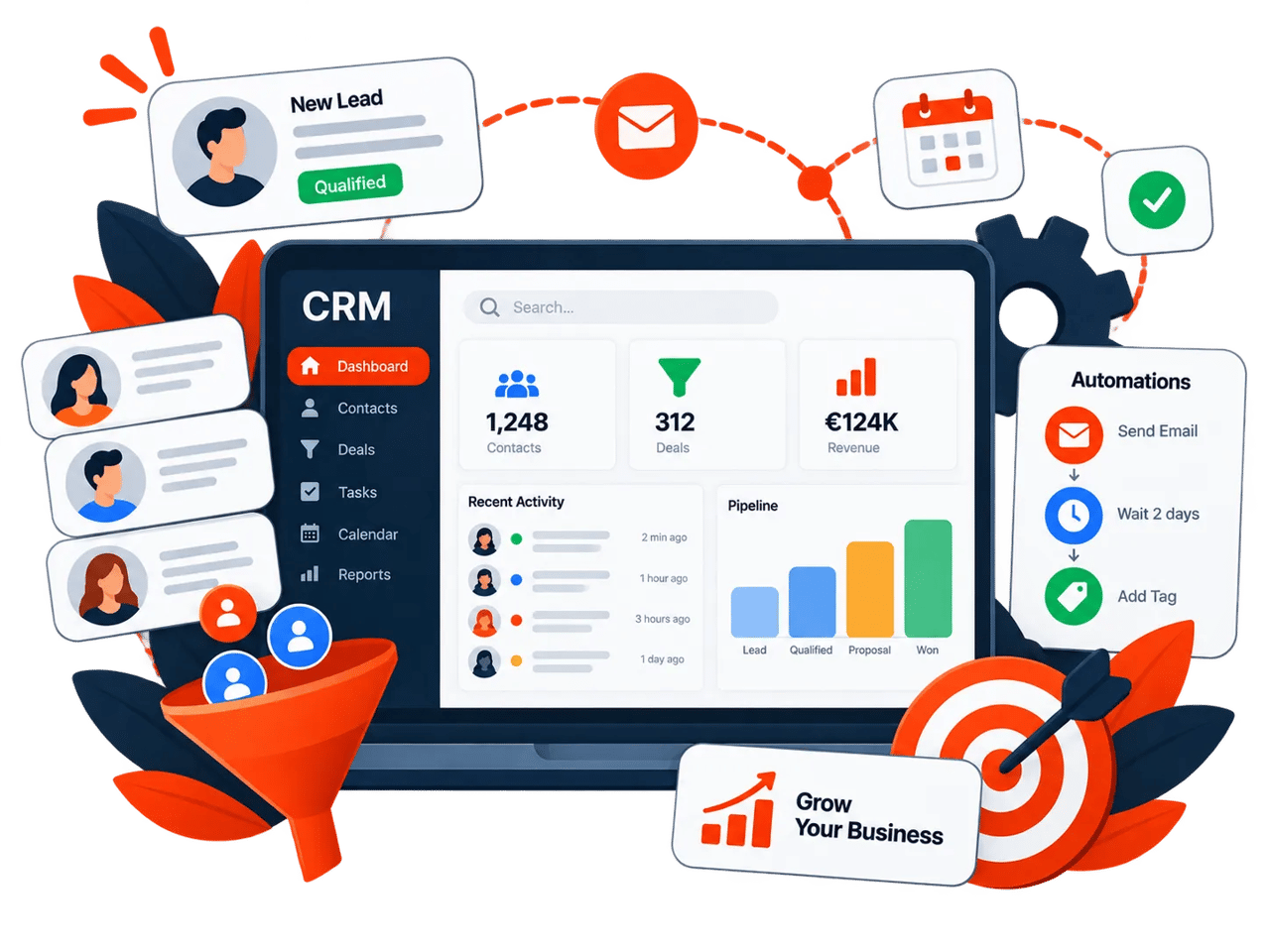
A generic CRM assumes a short sales cycle and a single point of contact, neither of which describes real estate here. Property matching means the system needs to hold detailed listing data and match it to what a specific buyer is looking for, not just track a generic deal stage. Multilingual client communication tracking matters because the same lead might email in English, call in Spanish, and message on WhatsApp in French, and losing track of which language they prefer creates exactly the kind of friction that costs a sale. Document management for international buyers covers the paperwork foreign buyers generate: NIE applications, proof of funds, legal representation letters, documents an off the shelf CRM has no dedicated place for. And integration with the agency's own website is what turns a form submission into a tracked lead automatically, instead of relying on someone to copy it over by hand before it goes cold.
A short checklist before you commit
Check whether it can hold detailed listing data and match it to buyer preferences, not just track a generic deal stage.
See whether it logs which language, and which channel, WhatsApp, email, phone, each lead actually prefers.
Confirm it has a place for NIE applications, proof of funds, and legal paperwork, not just deal notes.
Check whether new leads flow in automatically, or whether someone has to copy them over by hand.
"The right CRM doesn't just store your leads. It makes sure they don't go cold while you're busy closing the next one."
— Ibiza Boost
The real trade-off isn't price, it's fit
An off the shelf platform is faster to set up and often cheaper upfront, and for a small agency with a simple workflow, that can be the right call. But most agencies end up bending their own process to match what the software allows, tracking half their workflow in the CRM and the other half in spreadsheets or WhatsApp threads nobody else can see. A tailored CRM costs more to build initially, but it is shaped around how the agency actually works, which is usually what decides whether the team keeps using it consistently a year later or quietly goes back to spreadsheets.
Let's build a CRM that fits how you sell
We look at your actual sales process, property matching, client communication, document handling, and tell you honestly whether an off the shelf tool or a tailored CRM makes more sense.