How does SEO really work?
SEO works in three stages: the search engine discovers and crawls your pages, analyses which ones it can add to its index, and ranks the results for each query. To improve your visibility, make crawling easy, publish useful content and fix technical problems. If your business serves a specific area, also work on the local relevance of your site and your online presence.
Why does a useful page not appear when a customer searches for it? SEO depends on a search engine being able to discover the page, understand it and consider it relevant compared with other pages. In Ibiza, that visibility can connect specific searches, such as a booking or a nearby service, with the right website. If you want help finding what is holding your site back, see our SEO optimisation service.
SEO does not mean paying to appear in organic results, or repeating a keyword many times. Google describes search as an automated process in which pages are discovered, analysed and, where relevant, shown in response to a query. Understanding these stages helps you tell a visibility problem from a content or structure problem.
What happens from the moment you publish a page?
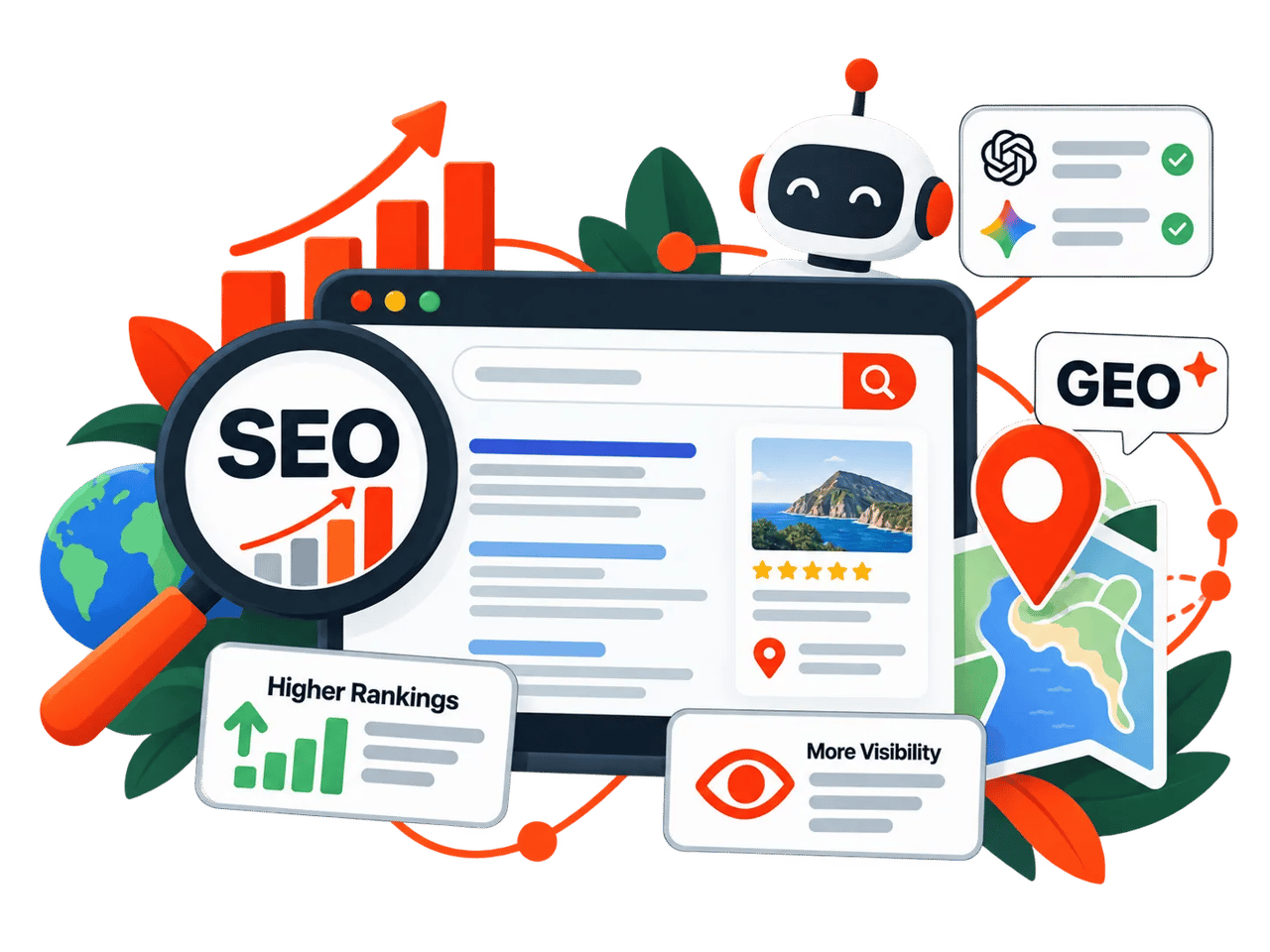
Imagine you publish a new page to explain a service. First, the search engine has to find its address and access it. Next, it tries to read and interpret the content to decide whether it can add it to its index. When someone runs a search, it selects and ranks the pages it considers relevant for that query. Google describes the stages of Search and points out that not every page goes through every stage.
So being published does not automatically mean being indexed, and being indexed does not mean holding a particular position. If Googlebot cannot access the page, for example because of a setting that blocks crawling, it cannot interpret it as intended. If the page is accessible but its topic is unclear, it may not be a good answer for the searches you want to attract.
Crawling depends on the search engine finding links and being able to reach your pages. A clear structure and internal links help connect related pages. Indexing, on the other hand, is about analysing and organising the content the search engine has been able to visit. They are separate processes, and it is worth checking both when you investigate a drop in visibility.
How to measure and improve your SEO
Start by checking that your important pages can be crawled and that they appear in Google's index.
Check that each page answers a specific search, and that its title and structure describe what it contains.
Track which queries generate impressions and clicks, which pages receive visits, and whether those visits lead to enquiries, bookings or other actions that matter to your business.
Search Console data shows queries, pages and performance in Google. An average position on its own explains little: compare it with impressions, clicks and actions. Many impressions but few clicks? Check that the title and description reflect what the page offers. Almost no impressions? Look first at indexing, the focus of the content and the demand it answers.
Make changes one priority at a time and watch the results before changing many things at once. Note which page you updated and which problem you wanted to solve, so you can tell a one-off variation from a lasting improvement.
"Being published is not being indexed, and being indexed is not ranking. Each stage has to be earned separately."
— Ibiza Boost
What makes a page visible on Google
Why can a page stay out of the index?
A page may not appear because it has not been discovered yet, because the server or its configuration blocks access, or because the search engine does not think it should include it in its index. Start by checking the exact URL and that the main content is accessible without logging in. Then check whether the technical instructions allow crawling and whether the page is linked from other relevant parts of the site.
Structure can also make interpretation harder: vague titles, near-identical pages, or important content that is not presented clearly make the search engine's job harder, and the visitor's too. A sitemap can help discover URLs, but it does not replace a logical architecture and does not force Google to index every page you submit.
Google's SEO starter guide explains that content should be useful to people. In practice, each page should meet a recognisable need, with enough information for its purpose.
What influences ranking on Google?
When several pages answer the same query, the match between the search and the content is an essential part of the analysis. A page about villa rentals, for example, should clearly explain what it offers, where it operates and what an interested person needs to know, rather than just repeating generic terms.
Search intent helps you decide what type of page to create. Someone looking for an explanation needs information; someone comparing services needs clear differences; someone who wants to book expects to find availability or a way to get in touch. Organising content around that need is more useful than trying to rank a single page for searches with different goals.
The site also needs to be technically accessible and easy to understand. Consistent navigation, specific titles, content that reads well on mobile and reasonable loading speed make the page easier to use. A well-designed website can still be hard to find if its structure, speed and content are not optimised. Learn more about our websites.
SEO ranking factors are not a recipe that guarantees a position. The work is about removing obstacles, explaining your offer better and creating pages that clearly answer relevant searches. Competition and the context of each search also affect which results are shown.
How does local SEO work in Ibiza?
For a business serving customers in Ibiza, local SEO connects the website with searches that express a nearby need. State clearly which services the business provides, which areas it serves and how customers can get in touch. Keep these details consistent between the website and the local profiles the business uses, and avoid presenting services or locations that do not match the real activity.
The website and the business profile play different, complementary roles. The website lets you explain services in detail, while the profile makes practical information easy to find.
Local pages should provide specific information, not just swap the city name in a generic text. Describe the services, the area served and the conditions that matter to someone searching from there. That way the content helps people decide whether the business meets their need, as well as giving the site geographic context.
Find out what limits your site's visibility
When a page already exists, you do not always need to start again. The first step is to identify whether the problem lies in crawling, structure, speed or content, and then order the improvements according to what your business needs. At Ibiza Boost we work on existing websites and adapt the audit and the optimisation to the scope of each project.
If you need to analyse your site and set priorities, take a look at our SEO optimisation service. The work can apply to websites built by our team or by another provider; the scope is defined for each situation, with no promises about specific positions. You can also check our pricing.
Frequently asked questions
What does SEO mean?
What does SEO mean?
It is the work of improving a website's visibility in the organic results of search engines. It includes making pages easier to crawl and understand, and offering content that is relevant to what people search for.
Does a well-designed website appear on Google automatically?
Does a well-designed website appear on Google automatically?
Not necessarily. Design and SEO are related but different: the technical structure, speed and content also affect whether search engines can find and understand your pages.
How long does it take to see an SEO improvement?
How long does it take to see an SEO improvement?
There is no single timeframe, because it depends on the site, the change made and how competitive the searches are. Track progress with visibility, click and action data, rather than judging the work by a single position.
What can a business in Ibiza do to improve its local SEO?
What can a business in Ibiza do to improve its local SEO?
Explain clearly on the website which services it offers and which areas it serves, and keep the practical information of its local profiles consistent. The content should reflect the real activity and answer the questions of people searching for those services in the area.
Can a website be optimised without rebuilding it?
Can a website be optimised without rebuilding it?
Often, yes. An audit shows whether the problem lies in access, structure, speed or content before a full rebuild is considered. Ibiza Boost audits and optimises existing websites, including ones built by other providers.